
AEM Content Operations at Scale: How We Manage Multiple Languages Without Chaos
Most enterprises treat multilingual content as a translation problem. It's actually an operations problem.
We manage AEM content operations for a $4 billion enterprise across multiple languages, under a 24-hour SLA with 99.9% uptime since 2021. Here's how — and it's not what most people expect.
The Counterintuitive Staffing Model
The question we get most often: "How many people do you need for multilingual content at this scale?"
The answer surprises people. You don't need one person per language. You need a system that makes language irrelevant to the publishing workflow.
Our approach:
Senior AEM developers who understand the content architecture deeply. Not linguists — architects. The content structure, component relationships, and publishing workflows are the same regardless of language. When your team knows the system at an architectural level, processing a French publish is operationally identical to processing an English one.
The translation itself is handled by the client's localization team. We handle the technical publishing, QA, and deployment. This separation of concerns is what makes it scale.
The Three-Layer Model
Layer 1: Content Architecture
Templates, components, and content fragments are designed language-agnostic from the start. Every component supports multi-locale by default. This isn't retrofitted — it's baked into the architecture.
When we audit enterprise AEM setups, the number one multilingual problem we find is components that were built for English and then patched for other languages. The fix is always more expensive than doing it right from the start.
Layer 2: Publishing Workflow
Every publish follows the same workflow regardless of language:
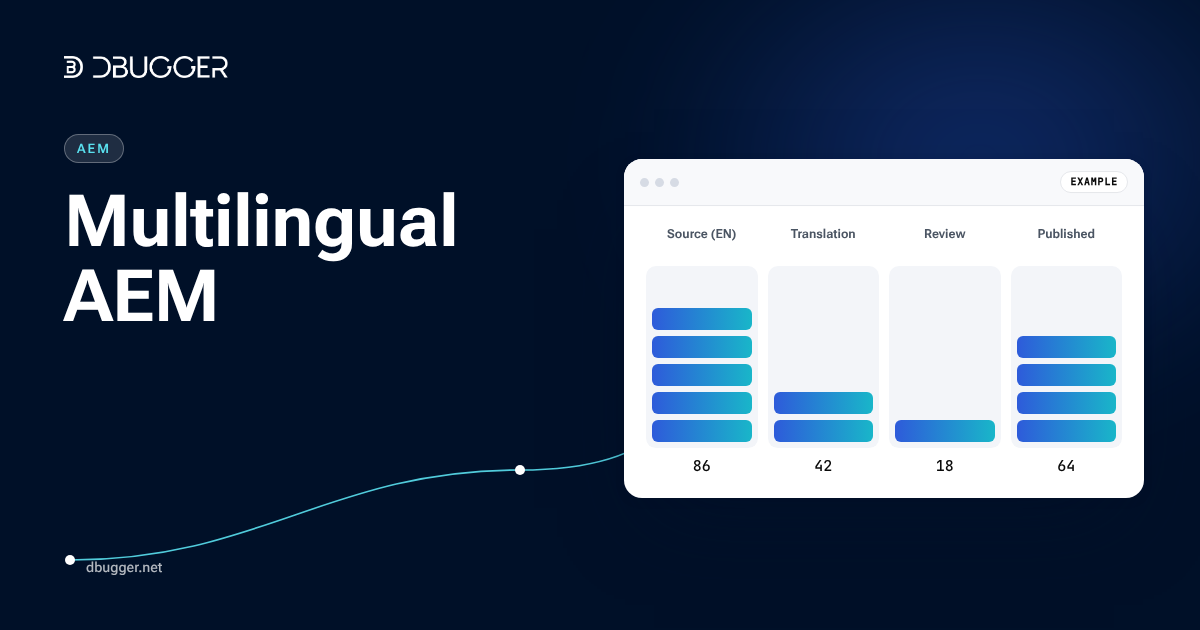
Content enters the system through a standardized intake process. QA checks run against language-specific validation rules. Publishing follows the same deployment pipeline. Post-publish verification confirms the content renders correctly in the target locale.
The key insight: standardize the process, not the content.
Layer 3: Operational Monitoring
Real-time monitoring across all locale-specific sites. If a publish breaks something in a target locale, we know within minutes — not days. This monitoring layer is what makes the under 24-hour SLA possible across every language we support.
The Numbers That Matter
Multiple languages and regions. Under 24-hour SLA. 99.9% uptime since 2021.
These numbers aren't the result of heroic effort. They're the result of a system designed to make publishing predictable, regardless of scale.
Why Most Enterprise Multilingual Setups Struggle
They treat each language as a separate project. They staff based on language coverage instead of system expertise. They build workflows that require language-specific knowledge at every step.
The result: bottlenecks, inconsistencies, and the constant feeling that multilingual content is "harder" than it should be.
It's not harder. It's just architected wrong.
Want to see how your multilingual AEM setup compares? Schedule a 30-minute architecture review at dbugger.net/contact/discovery-call — we'll identify the three biggest efficiency gains in your current setup.
Add AEM Capacity This Quarter.
The same team every day, with a <24h SLA.